

Podcasts
HumanRisk Podcast
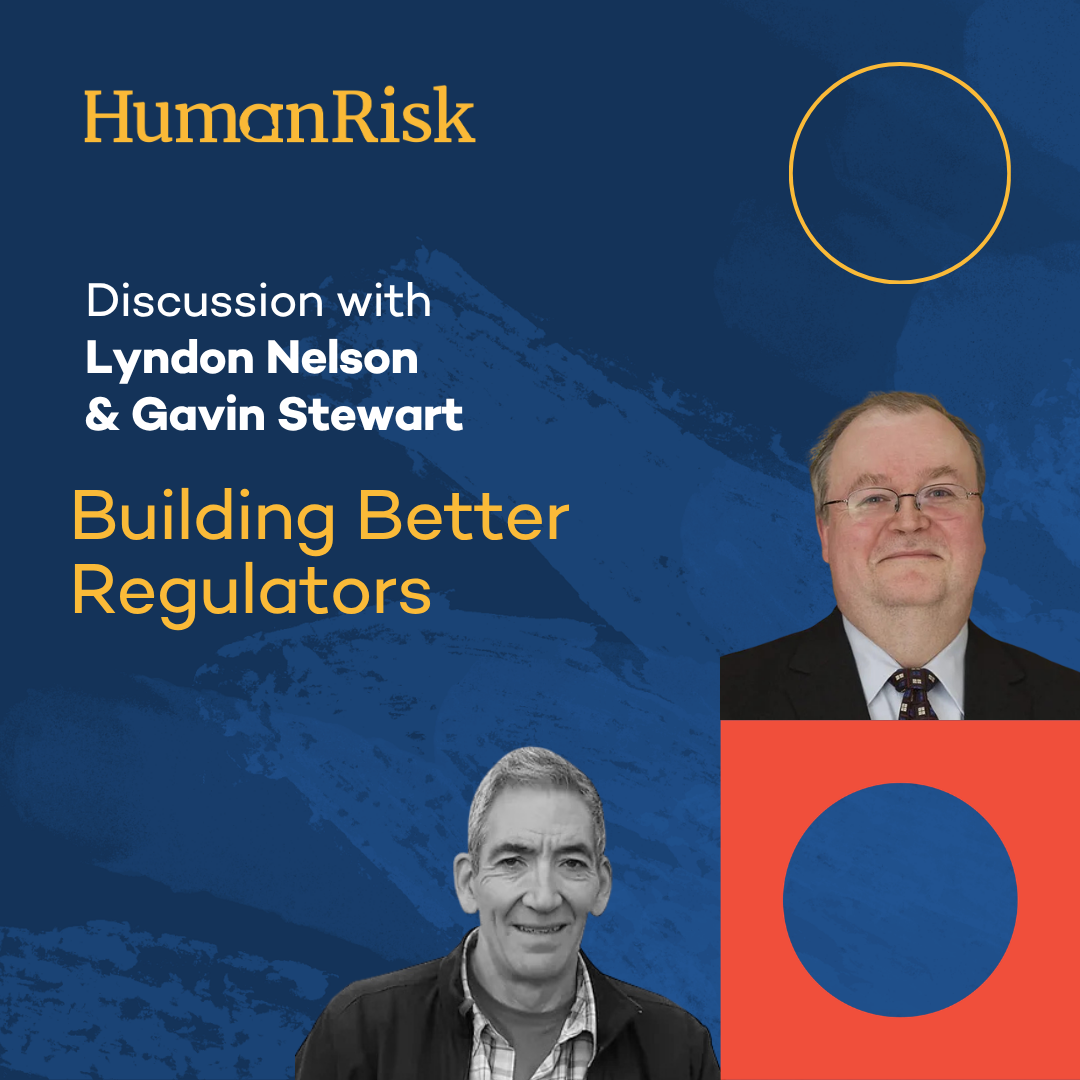
We joined Christian Hunt, author of Humanizing Rules and host of the Human Risk Podcast.
We discussed that regulators are expected to protect consumers, maintain stability, encourage competition, support innovation and increasingly promote economic growth. The problem is that those objectives don't always point in the same direction.
In our conversation, we explore the tension between rules and principles, why firms don't always respond to regulation as regulators expect, and how enforcement involves choices about which cases not to pursue. We also look at regulatory perimeters, the hidden costs of collecting data, and why having more information doesn't necessarily lead to better regulation.
We also discuss AI and crypto, behavioural science, consumer protection, international regulation, the temptation to fight the last war, and why regulators need imagination as well as analysis. Ultimately, this is a conversation about regulation as a human system — shaped by incentives, politics, judgement, uncertainty and the behaviour of both regulators and the regulated.
Following the Rules: the podcast conversation
We joined Lucy McNulty on Following the Rules to talk through some of the ideas at the centre of Building Better Regulators: The Art of the Impossible.
Regulators take an extraordinary number of decisions — in the tens of thousands a year across a large regulator — and very few of them are straightforward by the time they reach a senior desk. Most are judgment calls made on incomplete information, sometimes as close as 51/49, with the knowledge that some will still look wrong with the benefit of hindsight.
Part of the conversation is about why that reality is so poorly understood. Regulatory costs are visible: more compliance staff, longer forms, slower processes. Regulatory benefits are invisible until they fail: the scandal that didn't happen, the firm that didn't collapse. That asymmetry shapes public perception in ways regulators rarely get to correct.
We also talk through the distinction the subtitle is built on — the difference between trade-offs that are simply inherent to the job, and the more recent trend of denying those trade-offs exist at all. And we cover Nikhil Rathi's repeated, so far unanswered, call for 'metrics for tolerable failure' — what it would mean for politicians to say plainly what level of risk they're willing to accept in exchange for growth.
Below, you'll also find the last ten episodes of Following the Rules, for anyone who wants to explore further.