
Building Better Regulators
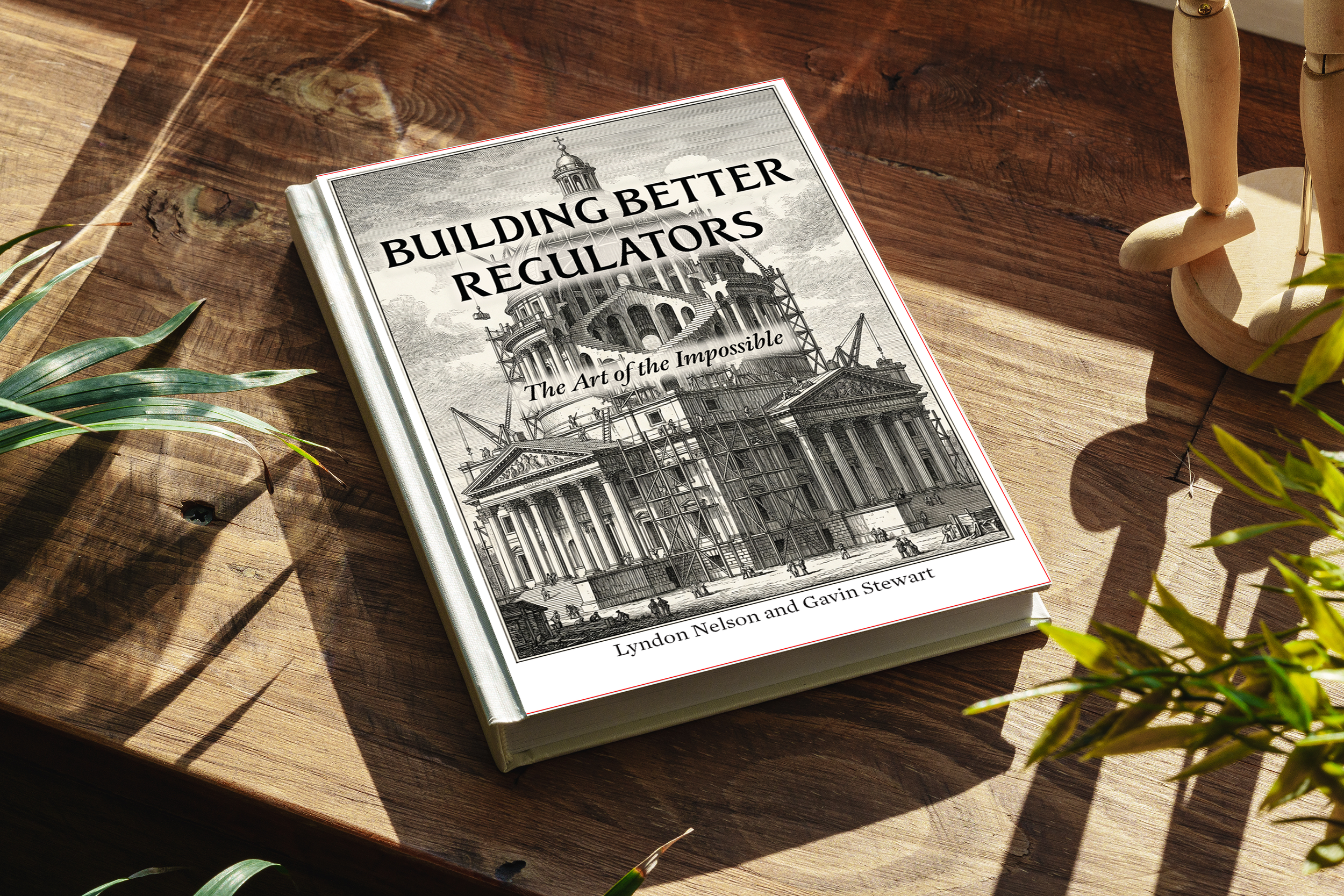
The aim of Building Better Regulators is to bring regulators out of the shadows. How they work, their strengths, weaknesses and limitations, are too important to be so badly understood. What choices are regulators making (often implicitly)? What balances are they trying to strike? What problems must they learn to live with? How should we respond to regulatory failures? These questions should be debated far more transparently. There are no free wins and even in a favourable environment there are always trade-offs.
But we're not living in a favourable environment for regulators, quite the opposite. The US, UK and EU are all looking to deregulate. The growth of crypto assets and especially AI challenges many of the core assumptions regulators rely on. Other regulatory questions, from water and the environment to social media, are more controversial than ever before. Meanwhile, the trade-offs themselves, which have too often been obscured or misrepresented, are now being denied
Regulators can and should be better than they are, but how do they get there? Lyndon Nelson and Gavin Stewart have spent decades wrestling with this challenge. Their answers start with being honest about the real gaps between what regulators are asked to deliver and what is possible. Rarely can those gaps be completely closed, but there are paths to follow, steps to take, that can start to bridge the gaps.
The book was published as an e-book and paperback on 8 September and the hardback version on 10 September. You can order by clicking on the button below.

Comments so far …
Aditya Narain on LinkedIn
Former Deputy Director, IMF
I was delighted to get to read an advance copy of ‘Building Better Regulators - The Art of the Impossible’ by Lyndon Nelson and Gavin Stewart. This remarkable, one of its kind book provides an inside look at a system from which so much is expected and about which so much is written, yet about the inner workings of which not much is known. The e-book is scheduled for release on September 8th and is one I would recommend highly to anyone with an interest in getting their arms around the many complex issues that lie in the making and enforcing of regulation. Drawing upon their extensive experience in the regulation of financial institutions and markets at both national and international levels, the authors offer a candid, and at times tongue-in-cheek, account of the inner debates, institutional constraints, and complex compromises that shape outcomes. The result is a remarkably accessible book on a technical subject that often hides substance behind complex jargon. The book will be especially helpful for readers who want to understand the limits of what regulators can realistically do, as distinct from what they have been mandated to achieve. Although its examples are drawn predominantly from financial regulation in the UK and other advanced economies, its appeal extends well beyond the financial sector and the developed world, helpfully aided by the accompanying case studies that draw on a variety of industries. The authors provide a useful perspective on the evolution of regulatory frameworks and a very helpful description of the consensus approaches, risk-based frameworks, and toolkits that are now widely adopted across the globe. Their relatable explanations go a long way toward demystifying the modern approach to regulation, while the brilliant cartoons by Lyndon, a rarity in treatises on regulation, further open up the subject and leave the reader yearning for more. Importantly, the book is not an apology for why regulation sometimes fails to work as it should. Rather, it seeks to explain how regulation could still deliver in the face of competing forces and under the many compromises through which regulations are developed, implemented, supervised, and enforced. This comes at a particularly relevant time, when the consensus reform agenda developed after years of negotiations following the global financial crisis is giving way in the wake of calls for modernization and simplification, viewed by many as simply deregulation by another name. At the same time, the operational independence of regulatory bodies as enshrined in the international standards is eroding without any let up in the expectation of their ability to prevent the next big crisis. Hopefully, the proponents of deregulation will also be inspired to read this book and better appreciate the trade-offs. I only wish this book had been around when I started in the business. It would have been a very useful playbook and saved me a great deal of angst over the years !
Comments so far …
John Sutherland on LinkedIn
Experienced Director
It's a terrific book ...
Edouard Fernandez-Bollo on LinkedIn
Member of the Administrative Board of Review at the European Central Bank
An excellent Book on Supervision has just been published , so if you are curious on how one can honestly face a task that is both impossible and absolutely necessary for Financial Stability, you should read it !