Here’s a selection of other published articles.

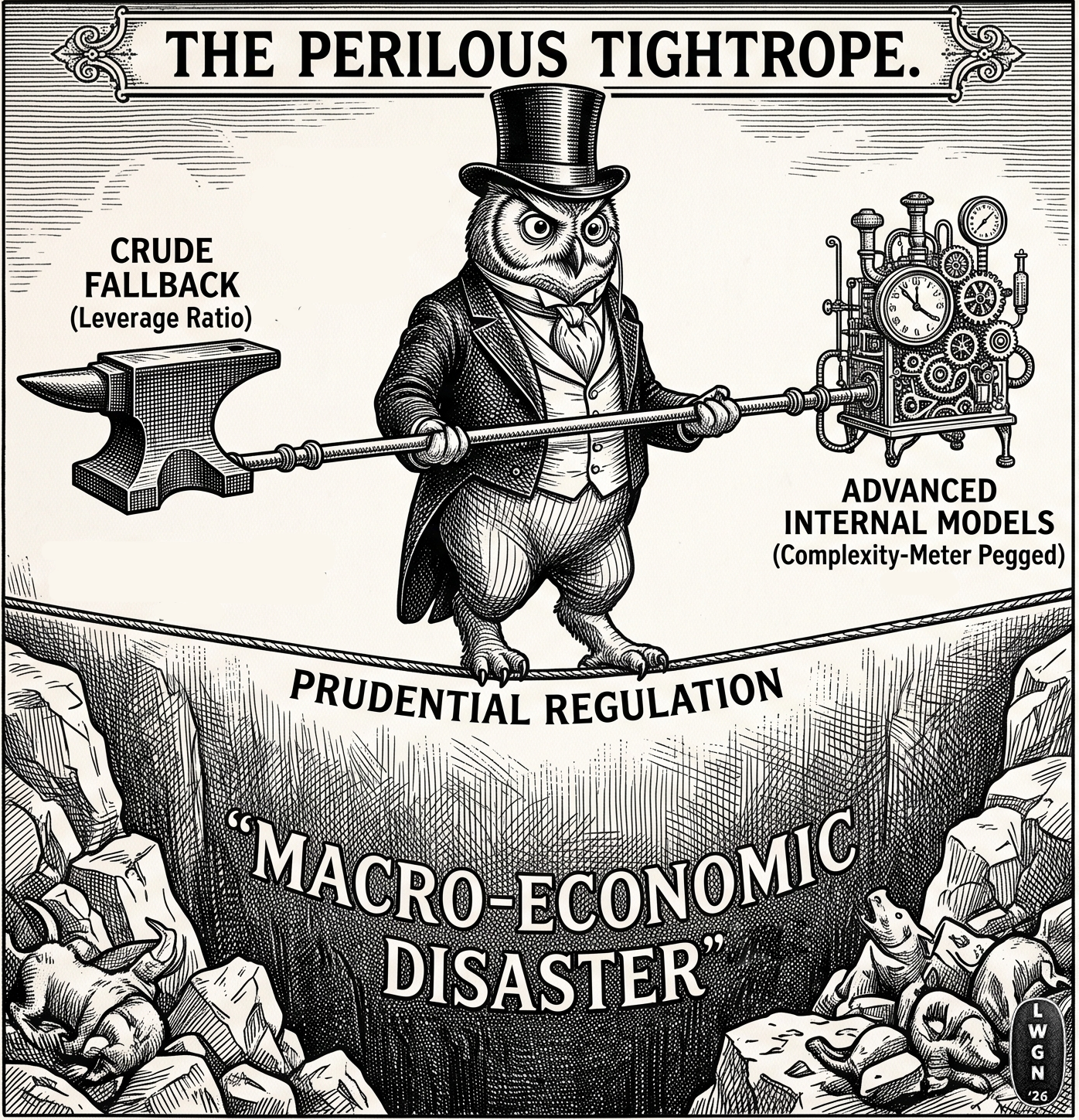
Prudential Regulation and the Art of Balance
Set bank capital too low and failures follow; too high and lending is choked. Lyndon Nelson traces how prudential regulation balances risk-sensitivity against complexity — from Basel 1 to "Strong and Simple" — and why the risks, like a dormant volcano, are forgotten but never gone.
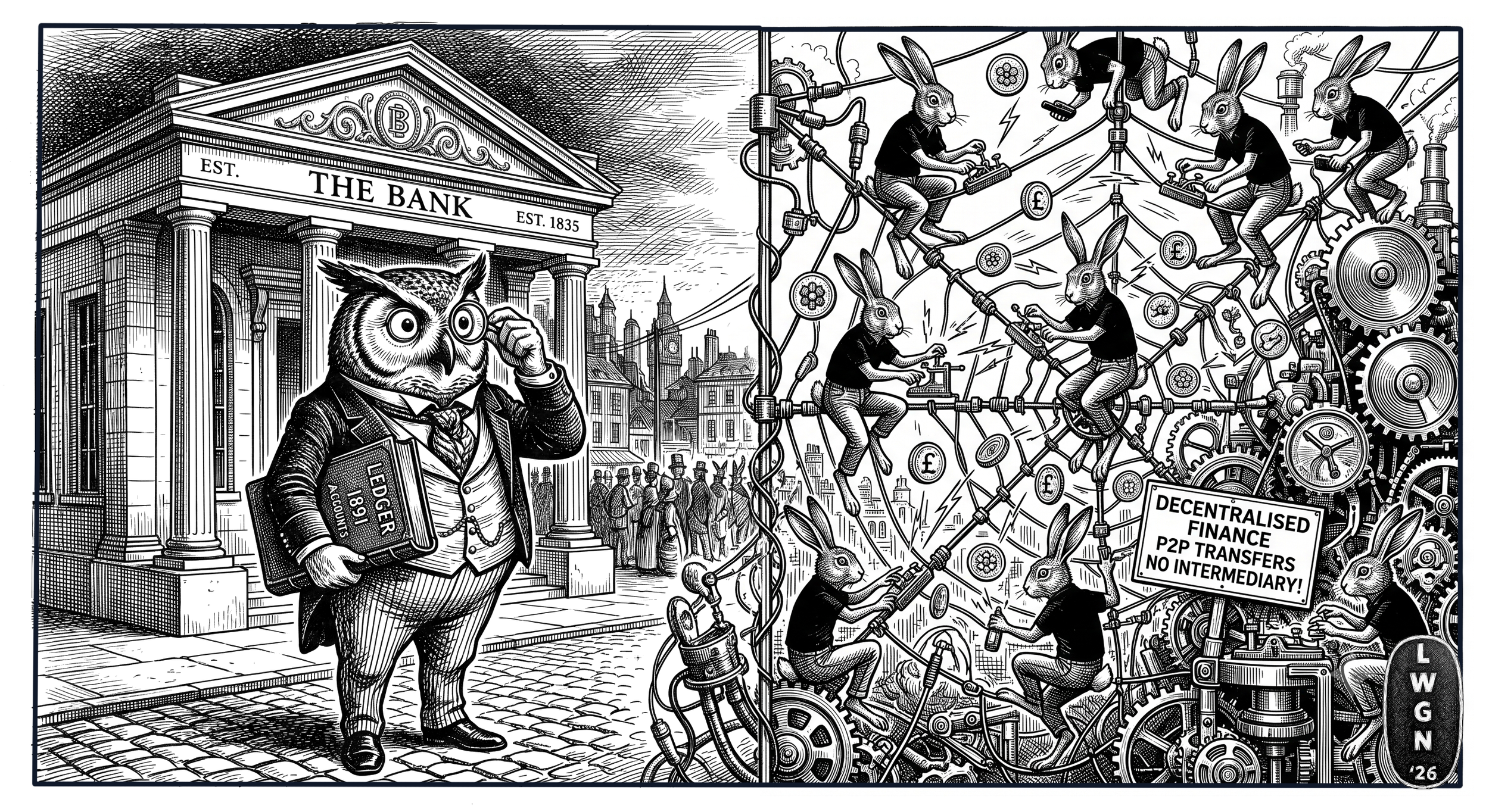
Crypto through the tulips
How do you regulate an asset with no jurisdiction, no clear owner, and no one to hold accountable? Lyndon Nelson examines the "where, who and whom" problem at the heart of cryptoasset regulation — why bans and "wait and see" have both failed, why decentralised finance defeats the usual tools, and why fragmentation points to a golden age of regulatory arbitrage.
Regulation, 16th Century Navigation and the Need for a Clock
Be more agile," regulators are told. Lyndon Nelson explains why agility has a price: without better data — the modern equivalent of the clock that solved the 16th-century longitude problem — acting early on risks like PPI is guesswork, and demanding speed without it is the sound of a revolver being loaded.

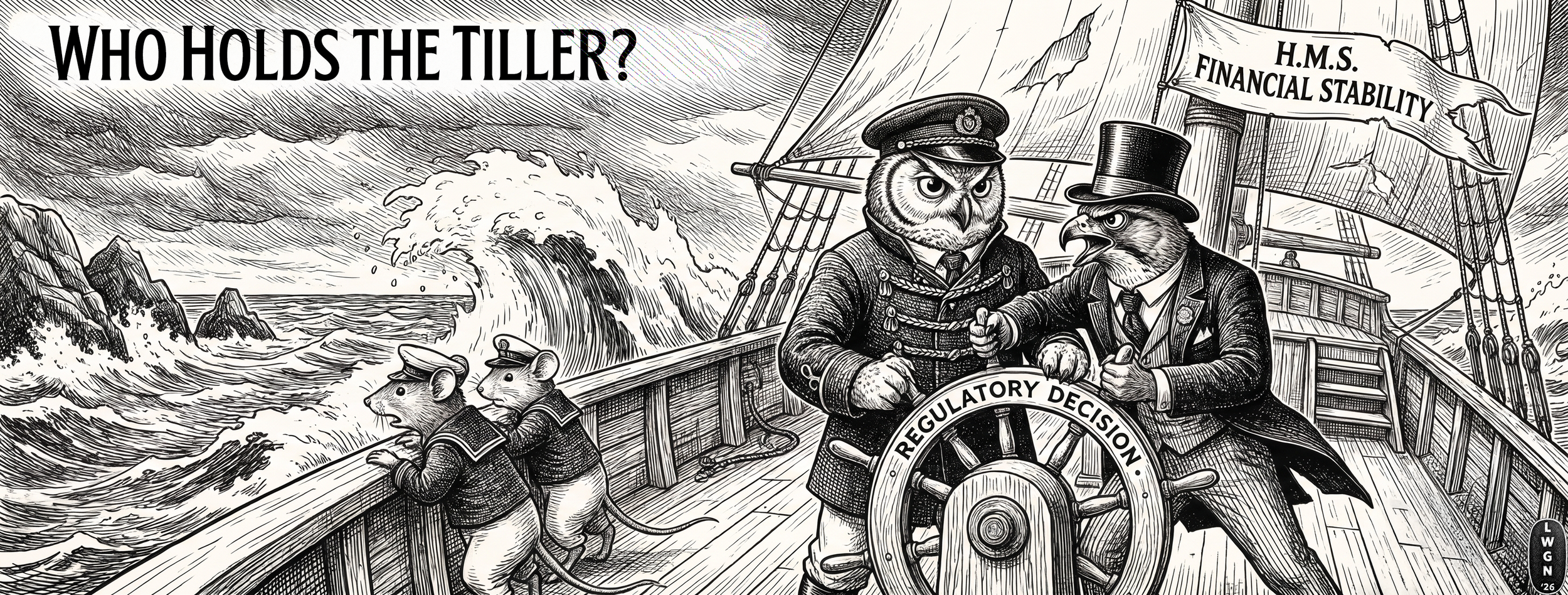
Who Holds the Tiller?
Conference season promised bonfires of red tape. Read closely, the more interesting contest was about something else: who should make regulation’s trade-offs.
With the Financial Services and Markets Bill due for Commons second reading on 10 November, I set the parties’ positions against a simple ladder – Parliament, ministers, regulators, supervisors – and looked at which rung each proposal reaches for.
Labour, the Conservatives and the Centre for a Better Britain all reach for the ministers’ rung, by different routes. The Liberal Democrats would hand much of the choice to a negotiated EU framework. The Lords went the other way: they removed two Treasury powers and added clause 25’s limits on skilled person reviews.
In 2023 the worry was regulators deciding without being seen. The risk now is ministers deciding without being seen either.
If ministers are to own the trade-off, three tests apply: write it down as an outcome, put it before Parliament, and answer for it when the downside arrives. None of the proposals on offer meets them yet.
Deregulation and a Game of Jenga
As demands grow to pull the regulatory bricks that feel most uncompetitive while everyone hopes the tower stays up. Lyndon Nelson uses a game of Jenga to show why no one knows which rule is load-bearing, why every choice trades one objective against another, and why the "no trade-offs" myth is the real danger.

Supervising, Fast and Slow
In 2021, in a chapter for Regtech, Suptech and Beyond, Lyndon Nelson broke financial supervision into six stages: information, analysis, assessment, decision, execution and evaluation. He then asked what technology would do to each. Five years on, with the FCA describing AI agents that will oversee thousands of smaller firms, he returns to mark his own homework.
Some of it holds up. Smaller firms and anti-money-laundering work were always likely to be the first places automation took hold, and the question that matters most is still where the human comes in. The bigger miss, he argues, was conceptual. Agentic AI does not just improve individual stages. It joins analysis, decision and execution into a continuous loop. Inside a bank, the six stages collapse into seconds. Inside the regulator, four of them speed up dramatically, but decision and execution do not, because judgement and due process are what make intervention lawful.
The result is a mismatch. Supervisors become much faster at seeing but hardly any faster at acting. There is a further risk: when the next analysis is only minutes away, there is always a reason to wait.
His answer is to decide earlier. That means settling in advance what evidence will be enough to act, and who holds the off switch. Ulysses had himself tied to the mast before he reached the Sirens. An AI flag is grounds for a look, but only accountable human judgement is grounds for action. As Lyndon puts it, no court convicts on the bark.